The Department of Pharmacology and Toxicology discussed the efficacy of the novel compound (A412997) and its specific targeting of dopamine receptors as a promising treatment for schizophrenia, aiming to minimize side effects and improve patients' cognitive abilities.
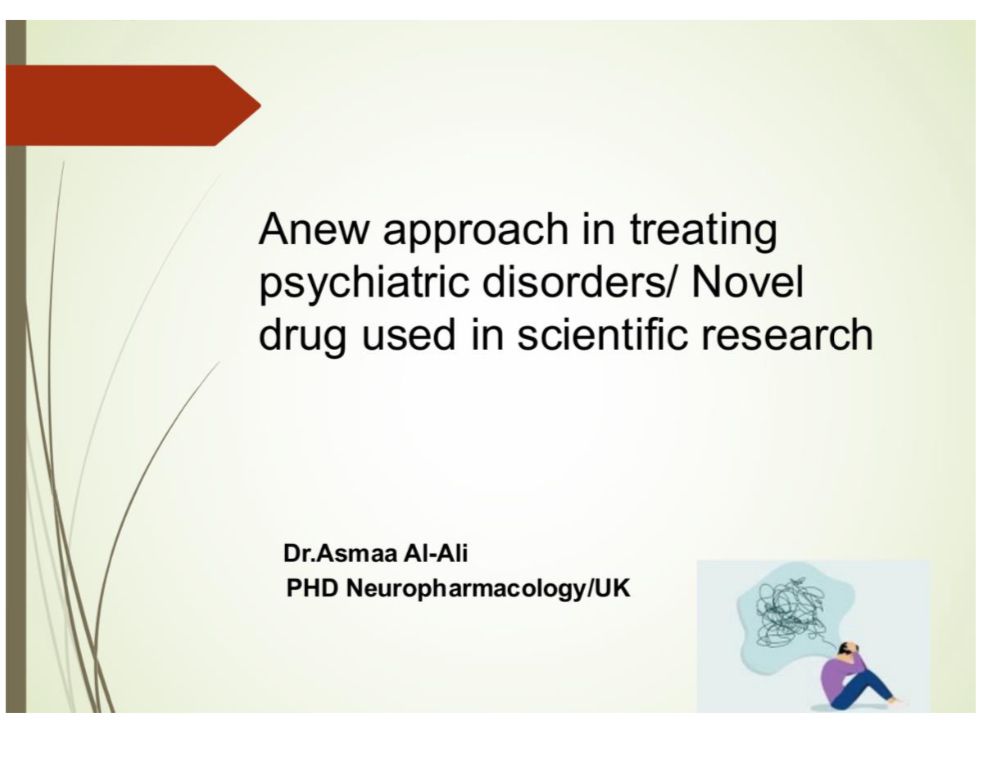
The Department of Pharmacology and Toxicology at the College of Pharmacy, University of Basrah, hosted a scientific seminar titled: 'A Novel Drug in the Treatment of Psychiatric Disorders (Schizophrenia) / A New Drug Used in Scientific Research'. The seminar featured a lecture delivered by Dr. Asmaa Mohammed Hussein, wherein she elucidated that schizophrenia is a mental disorder capable of affecting thoughts, feelings, and behavior. Its symptoms are primarily divided into three categories: positive symptoms such as psychosis, hallucinations, and unusual thinking; negative symptoms indicating decreased motivation and planning; and cognitive symptoms encompassing issues with attention, concentration, and memory.
The lecturer explained that the compound (A412997) is considered a novel substance in scientific research, acting specifically on Dopamine D4 receptors (D4R). It causes a concentration-dependent decrease in electrically stimulated dopamine release in the brain. This suppression of dopamine reduction was reversed in animal models treated with phencyclidine to simulate schizophrenia. These alterations in D4 receptor function within the animal model indicate the pivotal role of these receptors in the pathophysiology of schizophrenia itself. Therefore, targeting the D4R receptors using A412997 suggests a highly promising role for this drug in treating schizophrenia with minimal possible side effects, subsequently improving patients' cognitive symptoms.