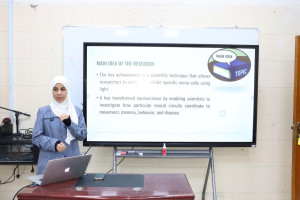
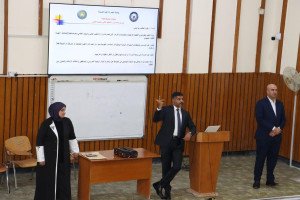
The College of Pharmacy at the University of Basrah meticulously organized an in-depth scientific training course fundamentally titled 'Drug Design Strategy.' Spanning two rigorous consecutive days, the course hosted prominent scientific figures from veterinary medicine to comprehensively elucidate the advanced mechanisms of structural drug modification and the complex pharmacokinetics of hazardous toxins.
The comprehensive academic course featured two primary robust lectures. The first day was systematically dedicated to a lecture by Professor Dr. Wasfi Al-Masoudi from the College of Veterinary Medicine at the University of Basrah. The lecture aimed strictly to provide advanced insights into drug design strategies utilizing multiple sophisticated methodologies, most notably the targeted structural modification of established fundamental pharmaceutical agents. The researcher elucidated that these structural augmentations are purposefully intended to optimize the physical and chemical properties of the drug, thereby significantly enhancing its targeted therapeutic efficacy. Furthermore, he presented an extensive array of completed research and registered patents concerning the chemical modulation of potent antibiotics. This represented a strategic scholarly endeavor designed to explicitly circumscribe antimicrobial (bacterial and fungal) resistance and deliberately engineer robust new generations of antibiotics characterized by diminished susceptibility to adaptive resistance mechanisms.
The proceedings of the second day prominently featured a highly specialized scientific lecture presented by Lecturer Huda Kamil Khassaf from the College of Veterinary Medicine. She carefully provided a profound analytical study detailing the intricate pharmacokinetics and exhaustive typologies of toxic pesticides, alongside their associated precarious exposure pathways—specifically delineated as dermal contact, respiratory inhalation, and the dietary ingestion of compromised matter. She meticulously highlighted the key biological determinants intensely conditioning toxin permeability, such as agent solubility and absolute concentration, navigating through the physiological reactions across the fundamental phases of systemic absorption, distribution, metabolic conversion, and eventual excretion. The lecture critically and emphatically concentrated on assessing the cumulative long-term pathological risks stemming from the sequestration of these chemicals within human adipose tissue and their insidious transformation into active carcinogenic and pathogenic entities over time. Ultimately, she vehemently urged the global research community to systematically amplify rigorous empirical investigations regarding the consequential ramifications of consuming food exposed to these environmentally pervasive toxic chemical agents.


.jpeg)