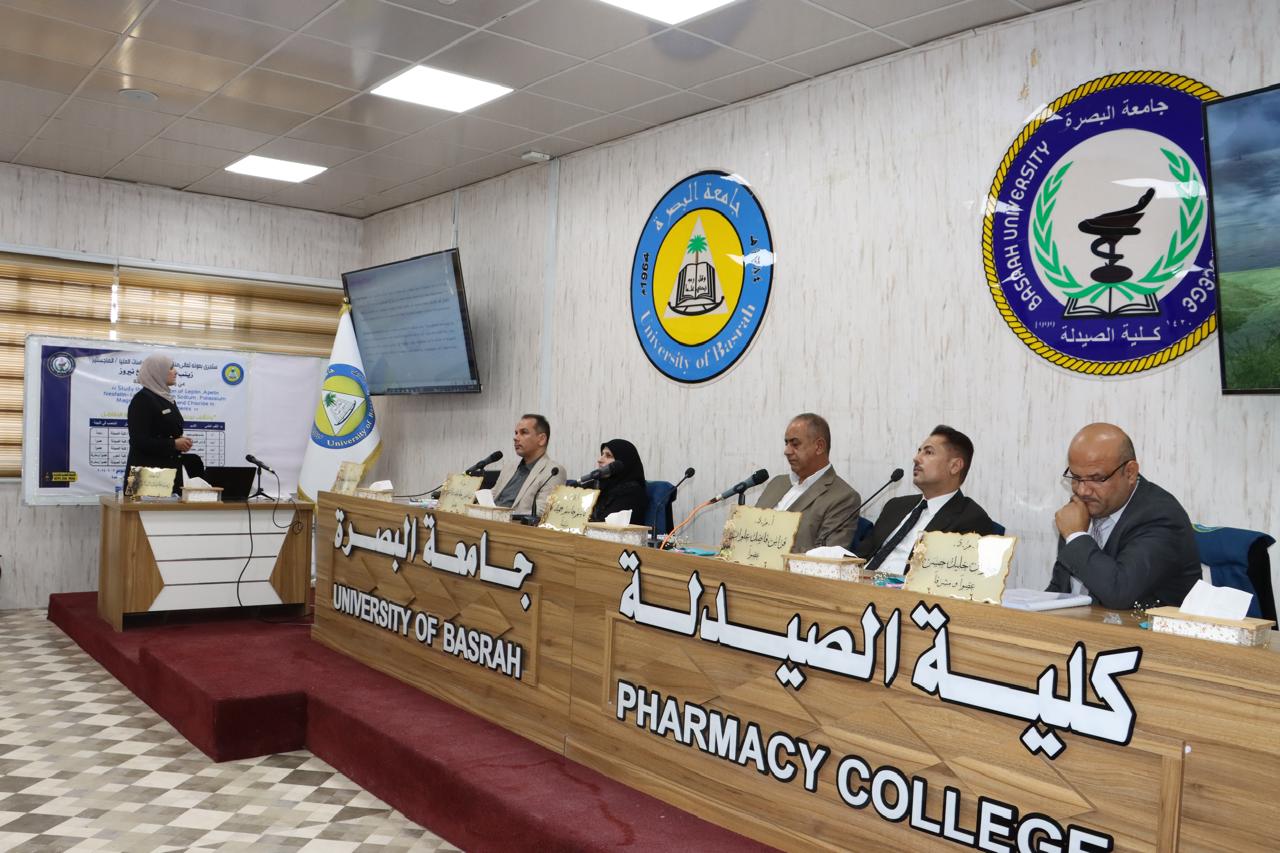
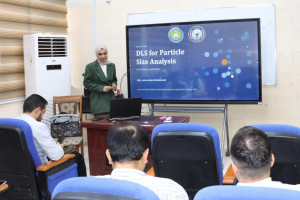
The College of Pharmacy at the University of Basrah thoroughly discussed a Master's thesis titled "A Study on the Relationship Between Certain Adipokines and Electrolytes in Hypertensive Patients." The study, elegantly formulated and presented by the student Zainab Fadhil Salboukh, aimed to evaluate the serum levels of these critical biomarkers, comparing them strictly against appropriately selected healthy control subjects to fundamentally determine their specific roles exclusively relating to the accurate diagnosis and treatment of hypertensive individuals.
The robust findings of the pivotal study demonstrated that significantly elevated levels of Leptin and Nesfatin-1 were predominantly observed in patients diagnosed with hypertension, whereas explicitly Apelin was notably reduced in these precise patients. Furthermore, it crucially revealed a clear elevation precisely in calcium serum levels among the hypertensive individuals. Explicitly, the results illustrated a direct proportional relationship strictly between Leptin and chloride, while uncovering an inverse proportional relationship effectively between Apelin and potassium, as well as definitively between Spexin and chloride respectively.
Through analyzing these rigorous findings, it became remarkably evident that the pronounced elevation of Leptin and Nesfatin-1 could distinctively be linked to progressive weight gain or obesity, both formally established as major fundamental risk factors directly associated with hypertension. Alternatively, it might fundamentally be associated directly with increased systemic inflammation, a recognized physiological factor that profoundly contributes to the progressive development of hypertension. Additionally, Apelin importantly serves functionally as an invaluable critical biomarker specifically for precisely measuring the specific extent of its fundamental impact explicitly on myocardial contractility, owing strictly to its inherent potent anti-inflammatory properties.
Consequently, analyzing these intricate fundamental relationships efficiently observed between the specified adipokines and electrolytes significantly suggests that these distinct associations could potentially impart substantially beneficial therapeutic effects specifically in the comprehensive clinical management actively targeting patients with hypertension, contingent predominantly upon the necessary execution of expansive prospective clinical studies in the future.